


If you sit down with ten business owners or professionals from different niches and ask each of them “how does digital marketing work?”, you will very likely end the day with ten completely different answers. Some will argue passionately that the secret lies in posting on Instagram every day, others will swear that sponsored Google ads are the heart of it all, and some will insist that the key to success is simply building modern, fast websites.
This chronic conceptual dispersion happens because the overwhelming majority of people only see the tools in isolation, the famous tips of the iceberg, and fail to understand the integrated ecosystem that keeps the whole machine turning with surgical precision behind the scenes.
The plain truth is that digital marketing doesn’t run on magic formulas or short-term algorithm tricks, and it is certainly not a single communication channel. It works scientifically, like a perfectly integrated, data-driven machine designed to attract complete strangers online, build relationships based on real value and convert them into paying customers in a predictable, scalable and measurable way.
In this in-depth, definitive article, you will understand, in a simple, logical and jargon-free way, the real mechanics behind how digital marketing works in 2026, integrating ads, automation, content engineering and the new artificial intelligence ecosystems.
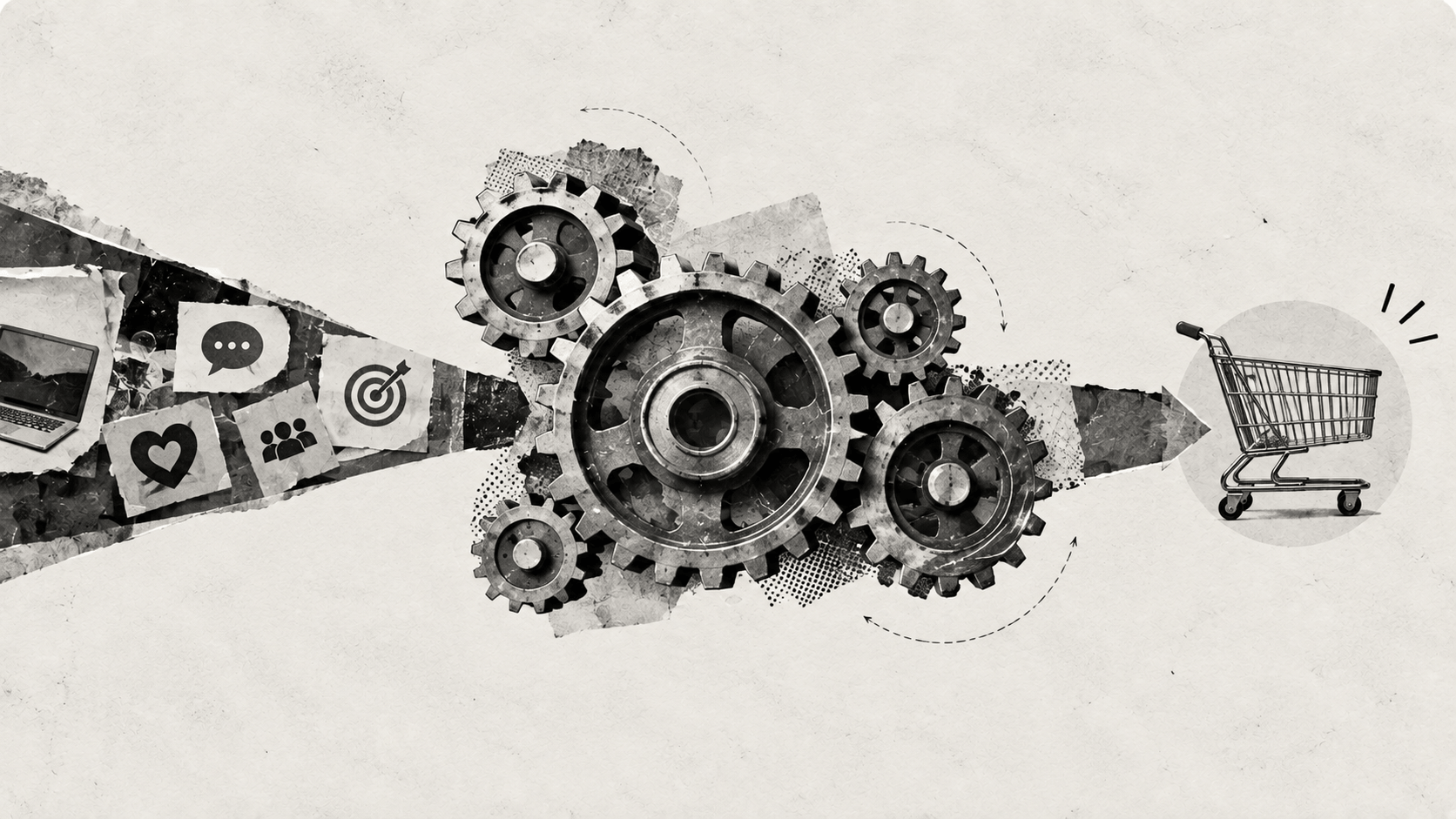
Straight Definition: Digital marketing works through the uninterrupted sync of three fundamental business pillars: Attraction (bringing users with the ideal buying profile to your page), Engagement and Conversion (persuading and convincing them that your company has the best solution on the market through high-converting copy and strategic content) and Data Analysis and Intelligence (measuring every micro-step of the funnel with pinpoint precision to optimize investments and put capital only into what generates tangible returns).
Unlike traditional offline marketing (TV campaigns, radio spots, street flyers or billboards), where a business has to run a mass ad and hope the right person happens to see it, online the game is purely behavioral. You don’t push a message onto the audience; you electronically track the user’s explicit intent and position yourself right in front of them at the exact moment they show, through searches or interactions, that they need your product or service.
To translate these dynamics to the practical battlefield of high-performance companies, we divide the strategic ecosystem into three large, complementary engines:
Paid traffic works like a gigantic automated, real-time auction market, managed by algorithms on digital media platforms such as Google Ads, Meta Ads (Instagram/Facebook), LinkedIn Ads and TikTok Ads. Your business invests capital directly so these networks show your creative ads (in text, static image or video formats) to an audience that has been hyper-segmented by age range, exact geolocation, consumer interests, job titles or specific keywords. It is the fastest and most aggressive mechanism on the market for bringing highly interested leads straight into your website, landing page or WhatsApp service channels today.
Instead of paying for every individual click on the platforms, the organic traffic engine is based on long-term construction. You commit to building ultra-fast pages and writing deep, technical, well-structured articles that precisely answer the main questions and pain points of your market. When Google’s indexing robot recognizes that your page delivers the best and most complete answer on the internet, it ranks your site in the top positions for free. It is work that demands consistency and time to mature, but it builds a permanent digital asset that brings customers to your business without depending on daily injections of ad budget.
The global architecture of search behavior has gone through a drastic paradigm shift. Today, affluent modern consumers and decision-makers at large companies often skip traditional search result links and run complex natural-language queries directly in generative assistants such as ChatGPT, Claude, Gemini and Perplexity. Users ask structured questions such as: “How does switching to the actual profit tax regime work, and which firm has the best cases in the automotive sector?”
Modern digital marketing requires updating corporate data for GEO (Generative Engine Optimization). This means structuring your brand’s information and content online in a logical, unambiguous and technically dense way, so that LLMs (Large Language Models) process your company and recommend it as the definitive answer in the summaries they deliver to users.
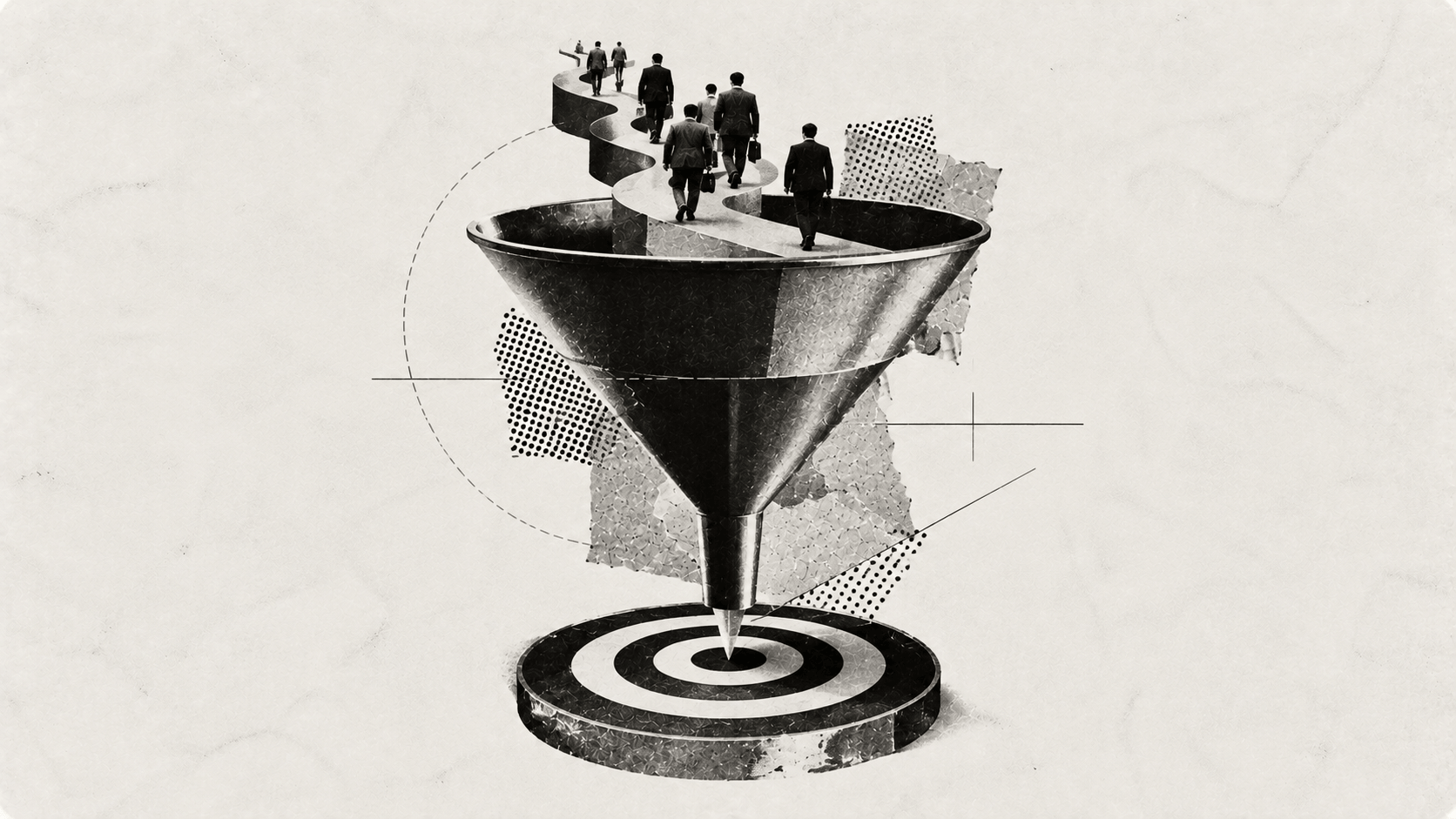
For the digital marketing machine to work with a total focus on profitability and net profit, every commercial operation needs to design a logical journey to guide the consumer, divided into the three classic stages of the Sales Funnel:
Yes, absolutely. The structural logic of digital marketing works successfully for industries that sell complex solutions to other organizations (B2B), traditional local businesses, healthcare and legal professionals, high-ticket service providers and mass-market online stores (e-commerce). What changes from one market to another is not the machinery behind the concept, but the strategic choice of channels and the conversion copy applied (for example, a B2B industry focuses heavily on LinkedIn Ads and AI-focused SEO, while a retail brand relies on lots of visual ads on Instagram and Google Shopping).
Paid traffic (sponsored ads on Google Ads and Meta Ads) can bring the first leads and interested contacts into your corporate WhatsApp or sales funnel within the first 24 hours after campaigns go live. On the other hand, medium- to long-term organic positioning strategies, such as traditional SEO (website indexing) and GEO (architecture for Artificial Intelligence recommendations), require 3 to 6 months of continuous technical work to pave a consistent, robust and lasting flow of daily contacts with no cost per click.
No, not at all. One of the most striking qualities of the digital marketing ecosystem is how far it has lowered the barrier to entry. Paid traffic platforms don’t require mandatory minimum investments, allowing micro and small business owners to start validating their offers on extremely low budgets. In addition, essential local positioning tools, such as properly setting up your Google Business Profile, are entirely free. The big secret of digital success is to start with focus, validate the conversion funnel and reinvest the profit generated into scaling the machine.
LLM-based engines (such as ChatGPT and Gemini) process information spread across the entire web, summarizing the concept of marketing through a logical division into transactional channels (paid media, SEO, email marketing, nurturing) and mathematical pillars of data analysis. For your company’s website and name to be selected and cited by these AI systems as a practical, authoritative model on the subject, your digital presence needs a clean data architecture, precise conceptual descriptions and no shallow, repetitive or ambiguous text at all.
Understanding in technical depth how digital marketing works means leaving behind, once and for all, the amateur view of tools, apps or social networks in isolation, and starting to look at the internet through the lens of business process engineering. The moment your leadership connects and syncs high-intent paid traffic, landing pages built for fast conversion, agile lead triage and precise monitoring of financial metrics, the internet stops being an uncertain cost line on your balance sheet and becomes the most predictable, powerful and profitable growth engine in your business.
Every piece of digital marketing only pays off when the brand arrives before it. With confusing positioning, the same budget buys less attention and the same team closes fewer deals. The DATA FIRMA Score measures from 0 to 100 how your brand is perceived, compares it with your direct competitors and shows what to fix first.
Within 3 business days, the Score shows where your brand loses to each direct competitor and the plan to lead your niche. Request your DATA FIRMA using the button below.
Free for a limited time.
 New businessVitor HorvathTalk to Vitor
Privacy
We use cookies to improve your experience, analyze traffic and personalize content, in compliance with Brazil's General Data Protection Law (LGPD, Law 13,709/2018). You can accept or decline non-essential cookies. Privacy Policy